5 Dementia Aids: An Overview of Alzheimer's Aids

Some images are AI generated
Living with dementia or Alzheimer's can be a complex challenge, both for those directly affected and for the people around them. These conditions affect not only memory and cognitive function, but also daily routines and the ability to live independently. That's why we've created an e-book focused on practical dementia aids to support people with dementia and Alzheimer's. In this article, we'll highlight five more dementia aids along the same lines.
1. Memory clock
One of the most practical and supportive dementia aids is the memory clock. This clock does much more than show the time; it also displays the date, the day of the week, and often the part of the day, such as morning, afternoon, evening or night, along with memory prompts. These features are invaluable for people with dementia, who often struggle with time orientation. The memory clock helps them keep a sense of reality and routine, which is crucial for their daily wellbeing. For example, simply knowing it's morning can help someone with dementia understand it's time for breakfast, while knowing it's evening can help them recognise that bedtime is approaching. This clarity can help reduce confusion and contributes to a sense of calm and structure in their day.
2. Big button phone
Another essential addition to the range of dementia aids is the big button phone. The large buttons make it easier to dial numbers correctly, which is especially useful for people with reduced motor skills or visual impairments, a common aspect of dementia. Ultimately, being able to keep using everyday things for longer also has a real impact on slowing the progression of dementia.
3. Photo phones
Photo phones are an innovative dementia aid, as they replace the traditional keypad with personalised photos. Instead of dialling numbers, this phone lets users make a call simply by pressing the photo of the person they want to speak to. This is an intuitive solution for people whose memory and cognitive skills are impaired, for whom remembering phone numbers or navigating contact lists can be a challenge. The ease of use of photo phones gives people with dementia greater independence in how they communicate.
4. Alarm watch
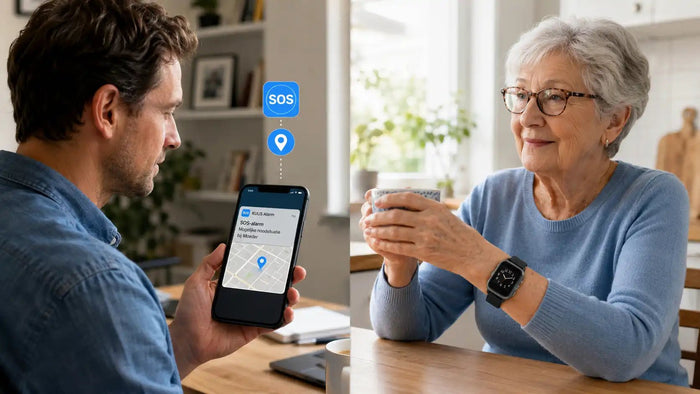
The KUUS. alarm watch is an outstanding aid for elderly people, especially those living with dementia. This watch is more than just a timepiece; it's an advanced device with a wide range of features. With built-in GPS tracking, the watch lets family members and carers track the wearer's location, an essential feature for elderly people who may experience disorientation or a tendency to wander. It also has an SOS button for emergencies, so help can be called quickly in a critical situation.
Ease of use is another important feature of the KUUS. alarm watch. It's designed with intuitive operation in mind, so elderly people with limited technical skills or cognitive challenges can use it easily too. The combination of these features – safety, location monitoring and simple operation – makes this watch an essential aid for increasing independence and peace of mind for both the wearer and their loved ones.
5. Simple remote controls
Simple remote controls are a real help for people with dementia, who often struggle with the complexity of modern technology. These remote controls are specially designed with large, clearly visible buttons and a limited number of functions, making them far more user-friendly than standard remote controls. The simplified interface helps users quickly and easily access basic functions such as switching the device on and off, adjusting the volume and changing channels, without confusion or frustration.
Conclusion
The dementia aids we've covered in this article – the memory clock, the big button phone, photo phones, the KUUS. alarm watch, and simple remote controls – play a crucial role in supporting people with dementia. They're not just practical; they also help preserve independence, dignity and quality of life. These dementia aids offer peace of mind to both users and their loved ones, and increase the ability of people with dementia to take part in their daily routine actively and safely.
For a more in-depth look at these and other aids, we invite you to download our e-book. It's a valuable resource full of information and insights that can help you choose the right support for your loved ones.