Alarm watch for elderly: the honest guide
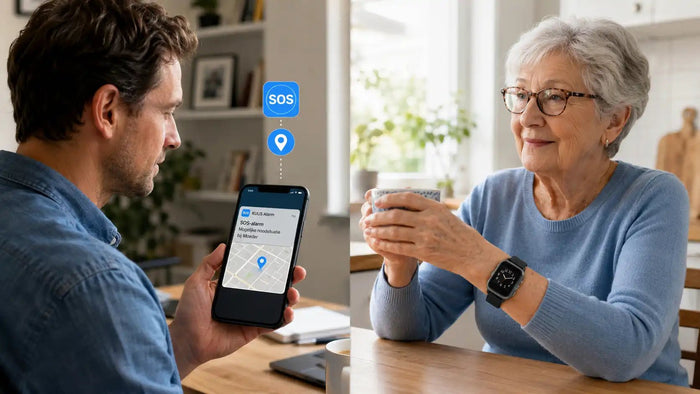
Some images are AI generated
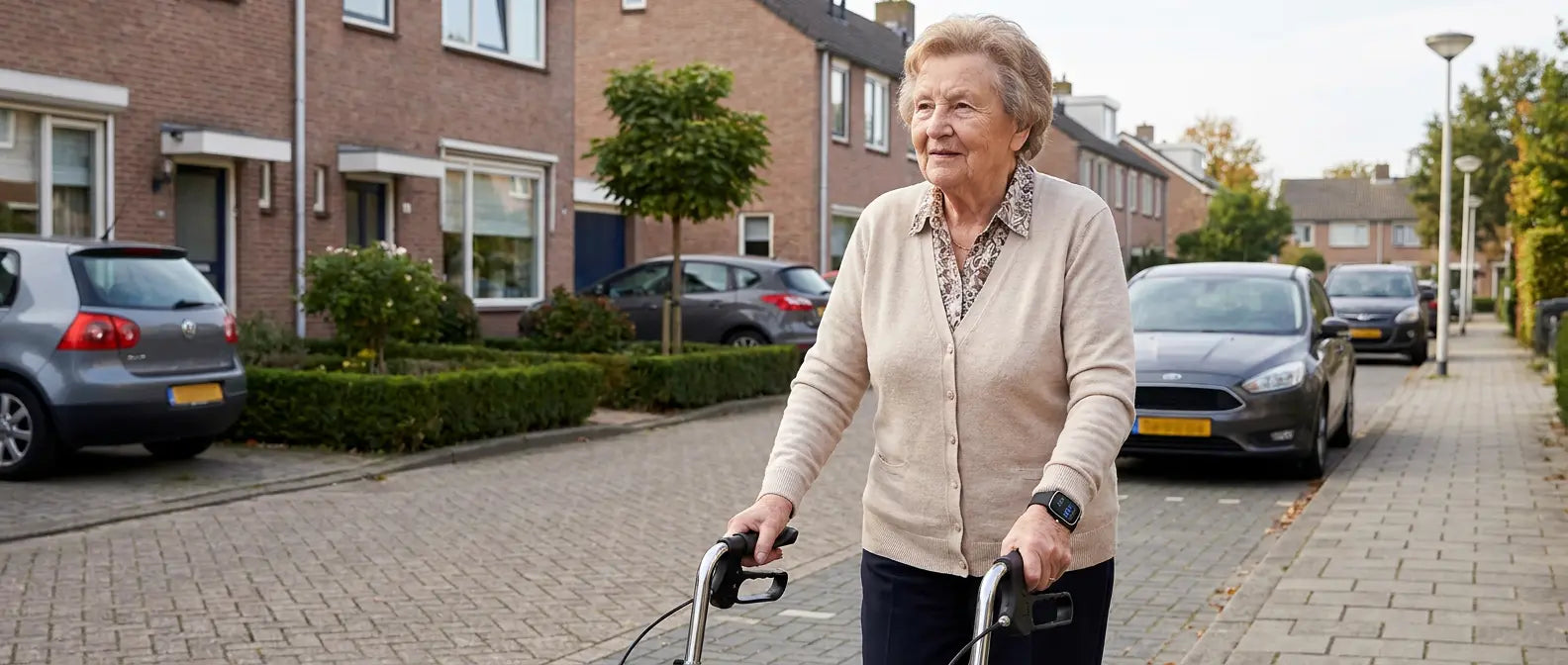
An alarm watch for the elderly is a wristwatch that calls for help straight away in an emergency. One press of the button and the watch automatically calls the saved contacts, usually family or a carer, and sends the location along. An alarm watch can also detect a fall, remind the wearer to take medication, and help you find them via GPS when they're out and about. It looks like an ordinary watch and doesn't need the wearer's own smartphone. Within care technology for the elderly, the alarm watch is the device that actually gets worn most often, and that's what matters.
Just a quick word on why we're writing this. We are Eric and Bas, father and son. We started KUUS. after a loved one in our family lay on the kitchen floor for two days before anyone came by. Her phone was on the counter. She couldn't reach it. We're not telling you this story to make an impression, but so you know this isn't a sales brochure.
What is an alarm watch for the elderly?
An alarm watch for the elderly, sometimes called a personal alarm watch, is a wearable alarm device for people who live independently but may sometimes need help quickly. That's often older people. The core idea is simple: one button that calls for help. Around that sits a layer of features that make the watch useful in daily life.
In care terms, this falls under personal alarm systems or mobile alarm systems. Most people search for "alarm watch for elderly", "personal alarm watch with fall detection" or simply "emergency watch for seniors". It comes down to the same thing: a watch that alerts the right people in an emergency.
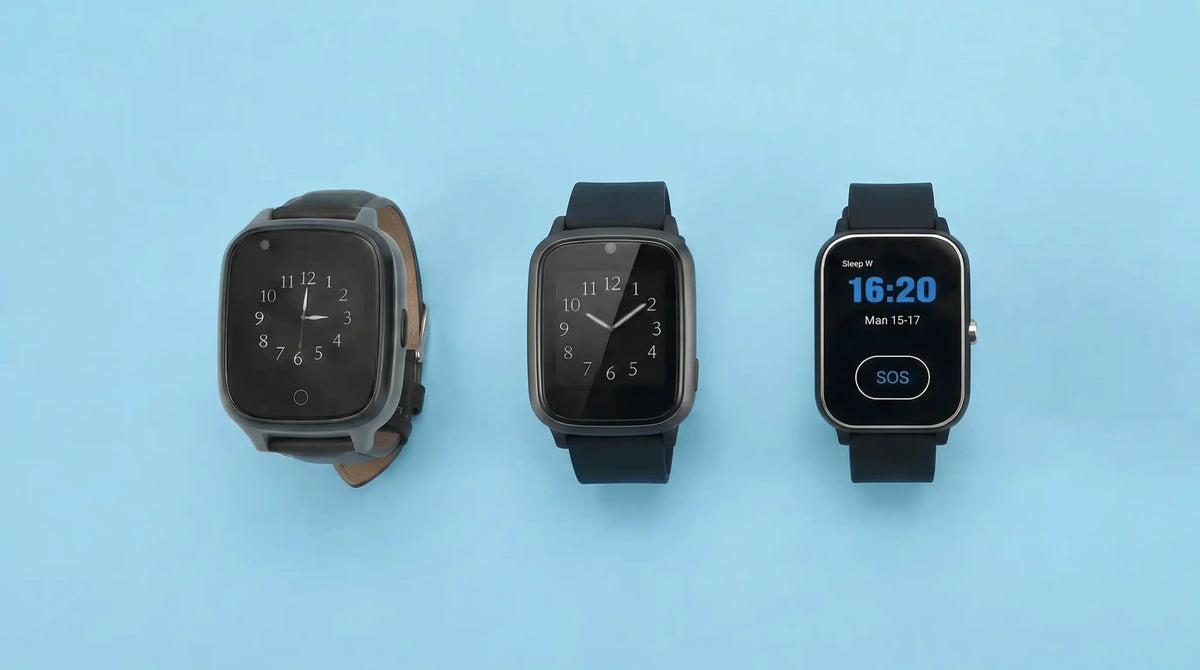
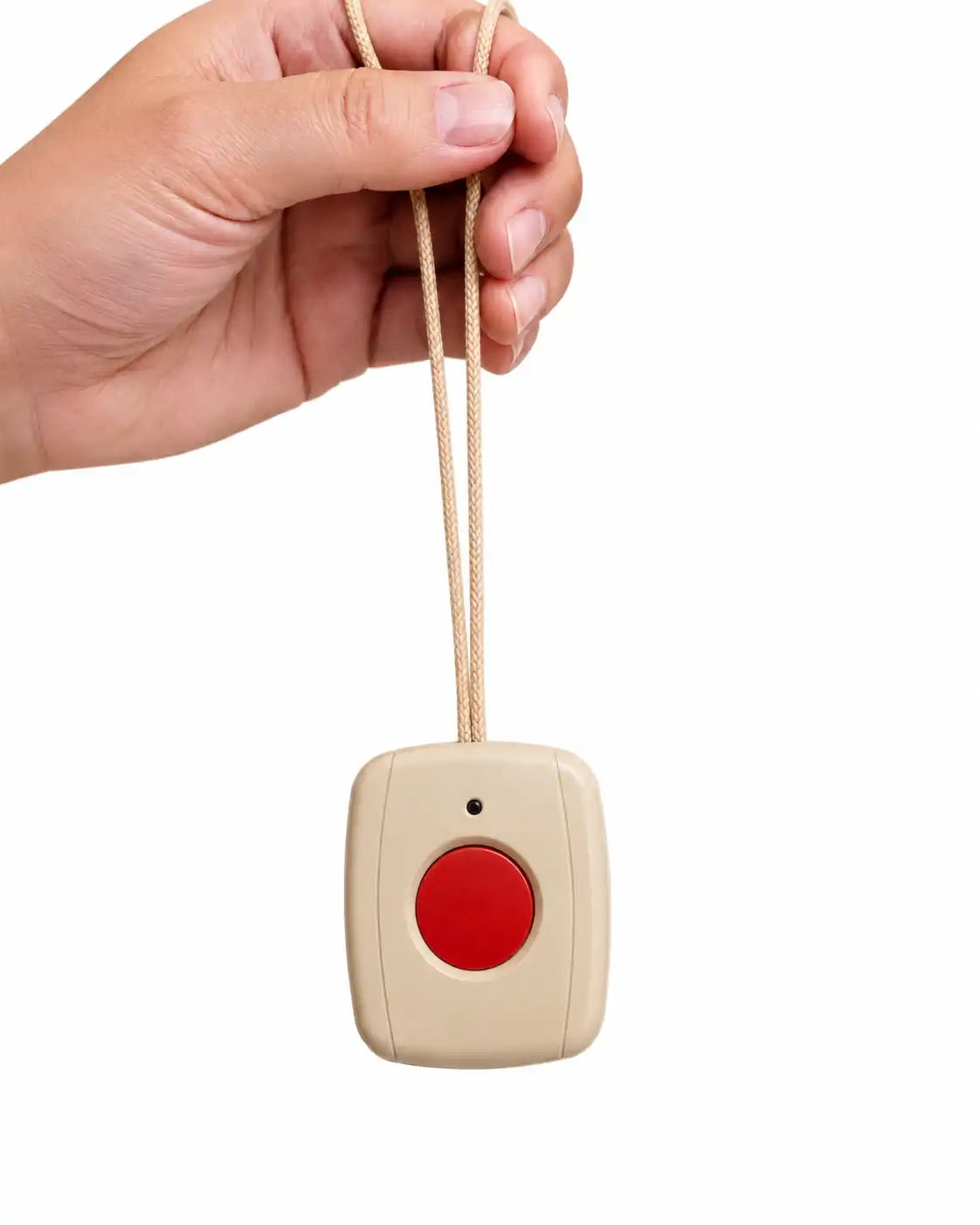
The main difference from the old pendant alarm on a chain is the look. An alarm watch looks like a normal smartwatch. That sounds like a small detail, but it decides everything. "A panic button sitting in a drawer is a bill, not safety." Most people don't want to signal all day that they need help, and it's hard to blame them for that.
What can an alarm watch for the elderly do?
Most alarm watches can do roughly the same things. These are the features that matter.
- Alerting and calling. One press of the SOS button and the watch automatically calls the saved contacts. Through the built-in microphone and speaker, the wearer speaks directly to whoever answers. No extra step.
- Fall detection. The watch recognises a hard fall and raises the alarm itself, even if the wearer can no longer press the button. After a detected fall it usually counts down 30 seconds before calling, so a false alarm can be cancelled.
- GPS and a safe zone. GPS lets you find the wearer on a map in the app while they're out. You can set a safe zone: if your father or mother leaves that area, you get a notification. Useful for early memory problems.
- Medication reminders and calendar. The watch can vibrate or give a signal at set times, for example for medication or an appointment.
- Heart rate and activity. Many models measure heart rate and step count. Treat this as a general guide, not a medical measurement.
- Water-resistant. A good alarm watch can handle washing hands, rain and washing up. Anyone who takes the watch off to shower tends to forget to put it back on.
The wearer doesn't need their own smartphone for this. The watch has its own SIM card and calls independently. As a family member, you use the app on your own phone to see the location and alerts.

Who is an alarm watch for the elderly for?
An alarm watch suits someone best who lives independently and largely still looks after themselves, but where there's a risk that help could come too late. Think of a parent living alone, someone who's often alone during the day, or someone who still goes for walks and does their own shopping.
An alarm watch can also help with early memory problems. The safe zone warns you if someone wanders further than intended, and the wearer stays traceable via GPS. How far this makes sense depends a lot on the person. With advanced dementia, the watch is often taken off or experienced as strange, and then it no longer works reliably.
If an alarm watch is used by a care organisation under restrictive agreements, for example to prevent someone wandering off, local safeguarding rules on restrictive measures may apply. For families using the watch at home on their own initiative, this usually isn't relevant. If you want to weigh up the wider picture, your local social services can offer an overview of care and support at home.
Alarm watch or other care technology?
An alarm watch isn't the only form of care technology for the elderly. There are also home sensors, motion detectors, smart doorbells and cameras. Each solves a different piece of the puzzle. The difference lies in where the technology sits: on the wall or on the wrist.
| Type of care technology | Works where | Is it worn? |
|---|---|---|
| Fixed panic button with base station | Indoors only, close to the base station | Often not, sits on the bedside table |
| Home sensors and cameras | In the home, at fixed spots | Not wearable, privacy is a factor |
| Alarm watch with SIM card | Anywhere with mobile signal, indoors and outdoors | Higher, it looks like an ordinary watch |
Smart devices for the elderly that stay fixed in the home stop helping the moment your father walks out the door. Sensors and cameras also raise more privacy concerns than a watch that simply tells the time. That's why, within care technology, the wearable alarm watch is the starting point for many families, not the smart box on the wall. Smart isn't a quality in itself. Working when it matters is.
Is an alarm watch for the elderly covered, and what does it really cost?
Sometimes. Some health insurers cover an alarm watch or personal alarm system in certain cases, often through supplementary cover or a related support scheme. Check with your insurer before buying and read the policy terms.
More important than the purchase price is what the watch costs over the years. And that's where the biggest difference between providers lies: with or without a subscription.
| Type | One-off | Per month | Total over 5 years |
|---|---|---|---|
| Alarm watch with monitoring centre subscription | €100 to €200 | €25 to €35 | €1,700 to €2,300 |
| Alarm watch with no subscription, own SIM card | €150 to €300 | €5 to €10 | €450 to €900 |
Amounts are indicative and depend on the provider and choice of SIM card.
"A €30 monthly subscription comes to €1,800 over five years. For a button that in most cases is never pressed." Safety for your parents doesn't have to be a subscription product that keeps running for as long as your mother or father is alive. An alarm watch that calls family directly via its own SIM card doesn't need that subscription. The only monthly cost is then a pay-as-you-go SIM. That's not a marketing trick, it's simply doing the maths.
When an alarm watch for the elderly isn't the right choice
You won't find this on most product pages. We're including it anyway.
- If there's always someone healthy at home. If your mother lives with your father, both reasonably mobile and almost always near each other, then an alarm watch solves a problem that doesn't exist.
- With advanced dementia. Anyone who keeps taking the watch off or losing it isn't wearing it reliably. At that point, home care or a different living arrangement usually fits better than a device.
- If your parent flatly refuses to wear anything. That's a battle you'll lose more often than you'll win. Have a different conversation about safety at home instead.
- If you want 24/7 professional monitoring. KUUS. calls family, not a monitoring centre. If you need professional follow-up around the clock, you're better off with a monitoring centre service. We say that honestly.
A straight no beats a purchase you regret.
Buying an alarm watch for the elderly: what should you look for?
If you want to buy an alarm watch, work through these points, in order of importance.

- What does it look like? If your parent doesn't want to wear it, no other feature matters. A watch that looks like an ordinary smartwatch always beats a medical-looking box on a chain.
- Does it work independently? Its own SIM card, no pairing with the wearer's smartphone. Otherwise it's only as reliable as that phone.
- Who gets called? Family or a monitoring centre. With direct family, the alarm reaches the people closest to them faster, and without monthly costs.
- Fall detection and GPS. Useful for frail older people and anyone who still goes outside. Note: fall detection isn't perfect, a hard knock can trigger a false alarm.
- Battery life. Two to five days is normal. Charging once a week is manageable, every day is a hurdle.
- Right to return it. Let your parent try it at home for a few days. Only then will you know if it's actually worn.
Want to see the models side by side? Take a look at our alarm watches for the elderly, or read the wider guide to smartwatches for seniors.
Frequently asked questions
What exactly is an alarm watch for the elderly?
"An alarm watch for the elderly is a wristwatch with an SOS button that automatically calls for help in an emergency." It calls the saved contacts, sends the location, and can often detect a fall, remind you about medication and measure heart rate. It looks like an ordinary smartwatch.
Is an alarm watch for the elderly covered by health insurance?
Sometimes. Certain health insurers cover an alarm watch or personal alarm system through supplementary cover, and in some cases local support services can also contribute. It varies by policy and situation. Check with your insurer or local council before buying.
What's the difference between an alarm watch and a normal smartwatch?
A normal smartwatch is built for sport and notifications and usually only works alongside the wearer's smartphone. "An alarm watch is built for safety: a large SOS button, fall detection and its own SIM card," so it can call independently, without the wearer needing a smartphone.
Is an alarm watch suitable for dementia?
Often yes with early memory problems, thanks to GPS and the safe zone. Usually not with advanced dementia, because the watch tends to get taken off or lost. The watch doesn't replace supervision or care, it's an addition to it.
Can my mother use an alarm watch without a smartphone?
Yes. The wearer doesn't need their own smartphone: the watch has its own SIM card and calls by itself. As a family member, you do use a smartphone with the matching app to receive location and alerts.
What does an alarm watch cost?
The purchase price is usually between €100 and €300. After that it varies a lot: a model with a monitoring centre subscription costs €25 to €35 a month, a model with no subscription just needs a pay-as-you-go SIM at €5 to €10 a month. Over five years, that quickly adds up to more than a thousand euros.
In closing
An alarm watch for the elderly isn't a complicated product. It calls when the button is pressed, and it raises the alarm when there's a fall. "The question that really matters is whether it's being worn at the moment it's needed."
That's why appearance isn't a side issue and a subscription isn't a given. A normal watch on the wrist, not a box in a drawer. Want to know which model suits your father or mother? Take a look at the S4 and S5 alarm watches, both with no subscription, with an SOS button, fall detection and GPS. For your parent, it's just a watch. For you, it's peace of mind.
About the writer
Bas Lommen is co-founder of KUUS. Together with his father Eric, he started the company after a family incident in which a loved one lay on the kitchen floor for two days before help arrived. More about the company on the about us page.